
A Little Heart, A Special Meaning
For centuries, gemstones have been treasured for their natural beauty, fascinating colours and the meanings people have given them. Every gemstone heart has its own character, shaped by nature over millions of years.
The heart has long been a symbol of love, affection and friendship. Combined with the beauty of natural gemstones, it becomes something more than a little keepsake. It can be a thoughtful gift, a reminder of someone special, or simply something beautiful to treasure for yourself.
Explore our collection and discover the stories, natural wonders and traditional meanings behind each gemstone. Perhaps you'll find one that reminds you of someone you love.
Which gemstone heart will you discover?
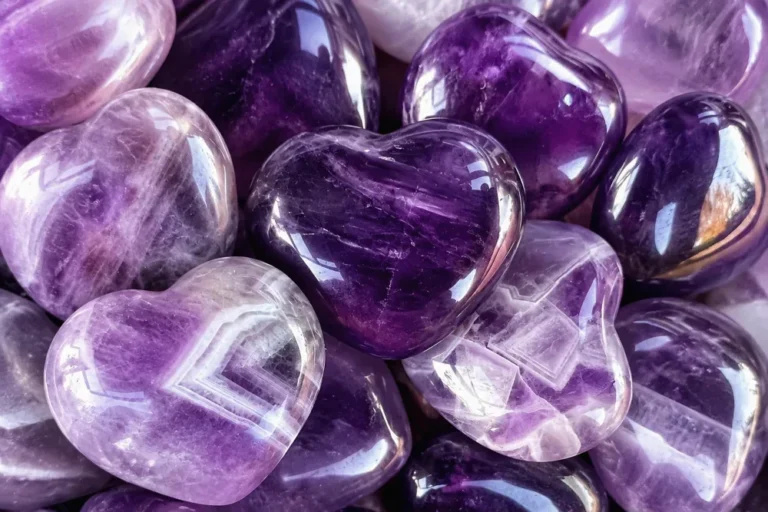
Amethyst
Harmony · Freedom · PeaceKnown for its beautiful purple colours, Amethyst has been treasured for thousands of years and is traditionally associated with peace, harmony and protection.
Amethyst is a purple variety of quartz, a mineral found naturally in rocks across many parts of the world. Its colours range from soft lavender to deep violet, caused by tiny amounts of iron and natural radiation within the crystal.
Amethyst crystals often grow inside hollow spaces in volcanic rocks. Over thousands or millions of years, mineral-rich water helps these beautiful crystals form. Sometimes they grow inside rounded rocks called geodes, which can reveal sparkling purple crystals when opened.
The ancient Greeks believed Amethyst could protect people from becoming drunk. In fact, its name comes from a Greek word meaning "not intoxicated". Throughout history, the stone has also been associated with calmness, clear thinking and protection. These are traditional beliefs, rather than scientifically proven effects.
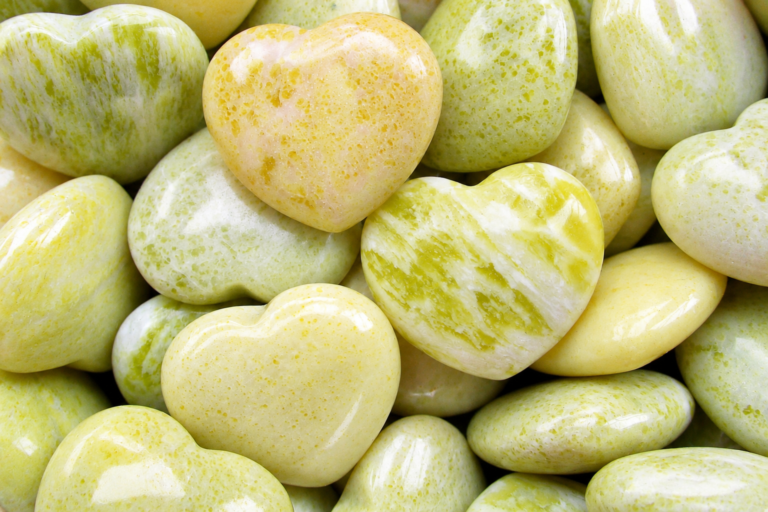
Lemon Jasper
Focus · Imagination · ClarityWith its soft lemon-yellow colours and delicate natural patterns, Lemon Jasper is a cheerful gemstone traditionally associated with focus, imagination and clear thinking.
Lemon Jasper belongs to the colourful jasper family, known for its many shades and patterns. Jasper occurs in different parts of the world, and its yellow and creamy tones can come from minerals within the stone, including iron compounds.
Jasper is made up of mineral crystals so small that you cannot see them without a microscope. Unlike the sparkling crystals of Amethyst, it usually looks solid and smooth, although polishing can bring out beautiful markings, spots and patches of colour.
Jasper has been used to make jewellery, ornaments and carved objects for thousands of years. Its name comes from an ancient word associated with spotted stones. Yellow jasper is traditionally linked with focus, imagination and clarity, although these are symbolic beliefs rather than scientifically proven effects.
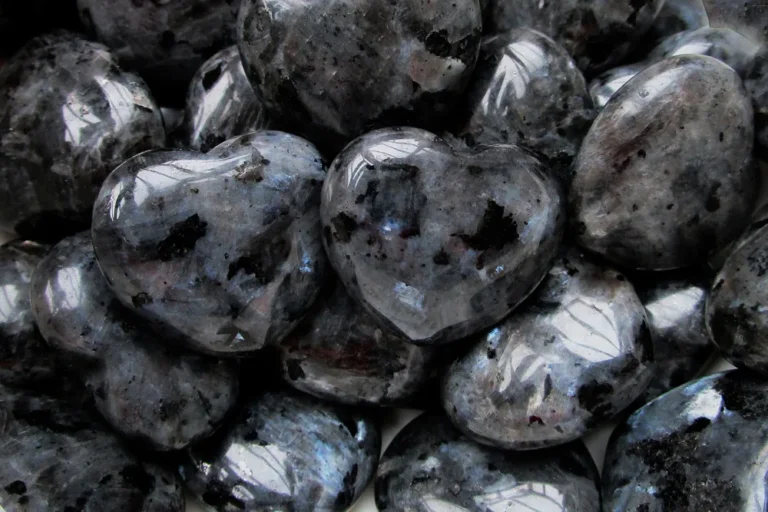
Larvikite
Inner Strength · WillpowerWith its mysterious blue flashes and dark, polished surface, Larvikite is a beautiful Norwegian stone traditionally associated with inner strength and willpower.
Larvikite takes its name from Larvik, a town in southern Norway where this remarkable rock is found. It formed deep beneath the Earth's surface as molten rock slowly cooled and hardened over millions of years.
One of Larvikite's most fascinating features is its shimmering blue or silvery flashes. These are caused by light interacting with tiny structures inside its feldspar crystals. As you turn the stone, the flashes can appear and disappear, creating a beautiful effect known as schiller.
Larvikite has also been used as a decorative building stone, including for walls, floors and monuments. Its striking appearance has made it popular far beyond Norway. In gemstone traditions, it is associated with inner strength and determination, although these are symbolic beliefs rather than scientifically proven effects.
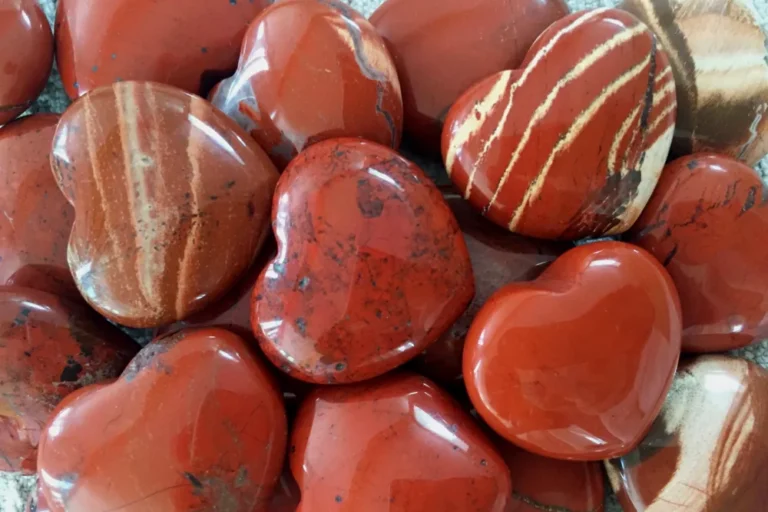
Jasper
Peace · Calm · TranquilityWith its rich red colours and striking natural patterns, Jasper has been treasured for thousands of years and is traditionally associated with peace, calm and tranquility.
Jasper is a colourful variety of quartz, made from mineral crystals so tiny that they cannot be seen without a microscope. It occurs in many parts of the world, including Australia, where a wonderful variety of Jasper stones can be found.
The deep reds and earthy browns seen in many Jasper stones often come from iron-rich minerals. Cream-coloured stripes, dark spots and swirling patterns form as different minerals become part of the stone. Polishing reveals these remarkable natural details, making every heart slightly different.
Jasper has been used for jewellery, carved objects and decorations since ancient times. Its name is linked to an old word meaning "spotted stone". In gemstone traditions, Jasper is associated with peacefulness, calmness and tranquility, although these are symbolic beliefs rather than scientifically proven effects.
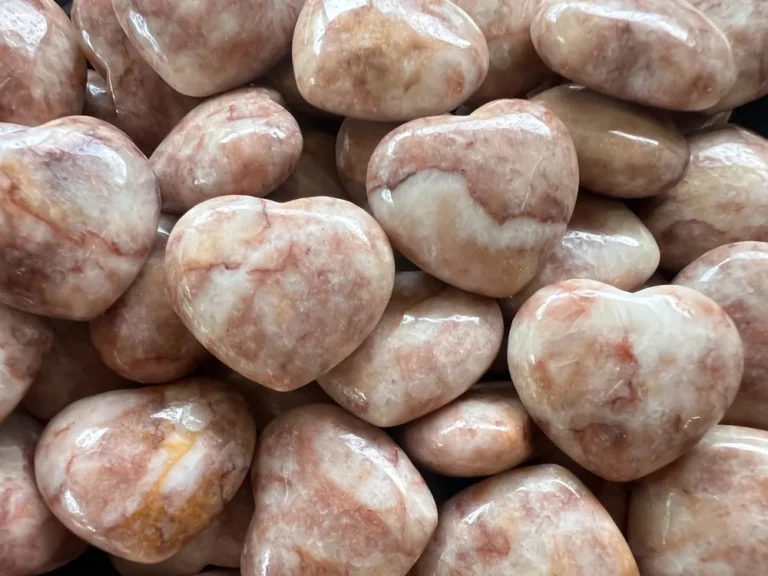
Red Line Jasper
Determination · Stability · EnergyWith its delicate pink and cream colouring, crossed by beautiful reddish lines, Red Line Jasper looks as though nature has painted each heart by hand. This attractive stone is traditionally associated with determination, stability and energy.
Our Red Line Jasper hearts originate from China. Jasper is a decorative form of silica-rich stone, generally associated with the quartz family, and is admired for its extraordinary variety of colours and patterns. Unlike transparent quartz crystals, jasper is usually opaque, with its appearance influenced by tiny mineral particles and other materials within the stone.
The most striking feature of Red Line Jasper is its contrasting natural markings. Warm reddish-brown lines run through a background of pale pink, cream and soft earthy tones. In jasper and related decorative stones, iron-rich minerals can produce red colouring, while differences in mineral content and the way the rock formed can create bands, patches and irregular patterns. Every polished heart reveals a slightly different arrangement.
Jasper has been used for jewellery, ornaments and carvings since ancient times, with its durability and beautiful colouring making it a favourite among stoneworkers. The name Red Line Jasper reflects this variety's distinctive appearance, while its traditional associations with determination, stability and energy make it a symbol of perseverance and finding strength in everyday life.
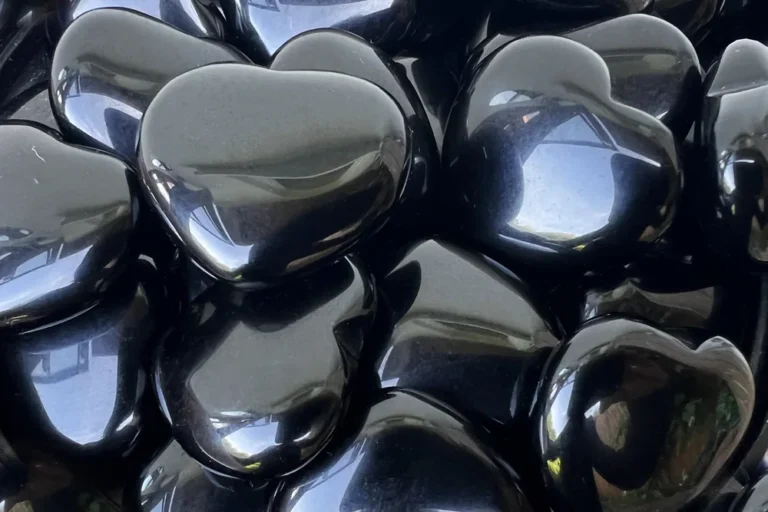
Black Obsidian
Protection · Strength · GroundingDeep black, beautifully polished and almost mirror-like, Black Obsidian is a remarkable stone born from volcanic fire. Throughout history, it has been associated with protection, strength and grounding.
Black Obsidian is a naturally occurring volcanic glass, formed when silica-rich lava cools so quickly that its atoms cannot arrange themselves into regular crystals. Unlike most gemstones, obsidian has no crystalline structure. Our Black Obsidian hearts originate from China, although this fascinating volcanic material is found in many parts of the world where suitable volcanic activity has occurred.
One of obsidian's most extraordinary properties is the way it breaks. Rather than splitting along flat crystal surfaces, it can fracture into smooth, curved shapes with exceptionally sharp edges. This is known as conchoidal fracture. Thousands of years ago, people used obsidian to make cutting tools, arrowheads and blades, while ancient civilisations also polished it into decorative objects and mirrors.
Although Black Obsidian appears almost completely black, its polished surface can reflect light with a beautiful glassy shine. Its dramatic appearance has inspired traditional associations with protection, inner strength and feeling connected to the Earth. Each heart is a small reminder of the extraordinary forces of nature that can transform molten rock into something so beautiful.
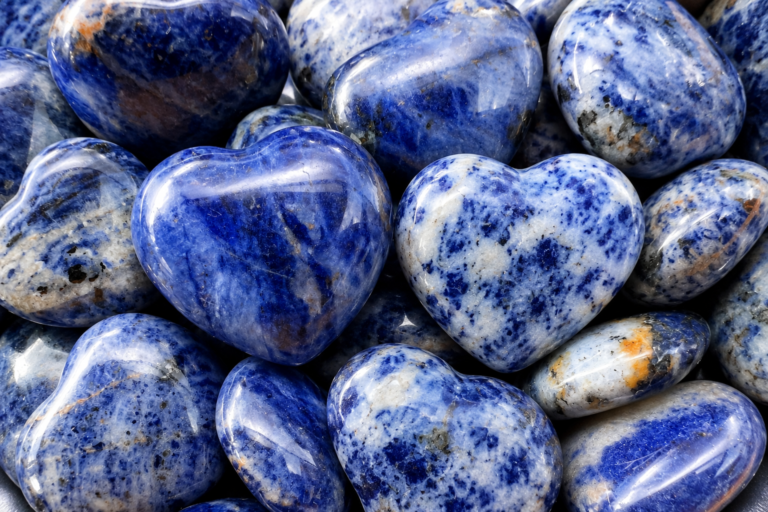
Sodalite
Positivity · Freedom · CourageWith its beautiful shades of blue and natural white markings, Sodalite is a striking gemstone traditionally associated with positivity, freedom and courage.
Sodalite is a mineral known for its rich blue colouring, which comes from its chemical structure containing sulphur. It forms in certain types of igneous rocks, created as molten rock cools and hardens beneath the Earth's surface.
Our Sodalite hearts come in two beautiful appearances. The deeper blue variety originates from Brazil, while Dotted Sodalite from India has a lighter, more mottled pattern. The white areas often contain other minerals, such as calcite, giving each polished heart its own natural markings.
Sodalite was first described as a mineral in the early 19th century. Its name refers to the sodium found in its composition. In gemstone traditions, it has become associated with positivity, freedom and courage, although these are symbolic beliefs rather than scientifically proven effects.
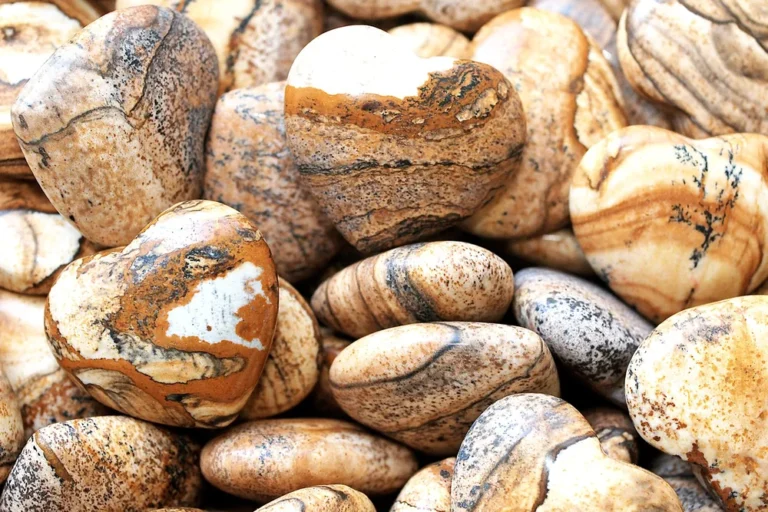
Landscape Jasper
Grounding · Stability · HarmonyWith its beautiful earthy colours and patterns resembling miniature landscapes, Landscape Jasper is traditionally associated with grounding, stability and harmony.
Landscape Jasper, sometimes called Picture Jasper, is a patterned variety of jasper found in several parts of the world, including South Africa, where our gemstone hearts originate. Its warm shades of cream, tan, brown and golden ochre give it the appearance of tiny natural paintings.
The remarkable lines and markings are created by variations in minerals and iron-rich compounds within the stone. When polished, these patterns can look like mountains, sandy deserts, winding rivers or distant horizons. Some stones even appear to contain an entire landscape within a single heart.
Jasper has been used for jewellery and decorative carvings for thousands of years. Landscape Jasper is especially admired for its naturally occurring patterns, which make every piece different. Its earthy appearance has also inspired traditional associations with nature, balance and a sense of belonging.
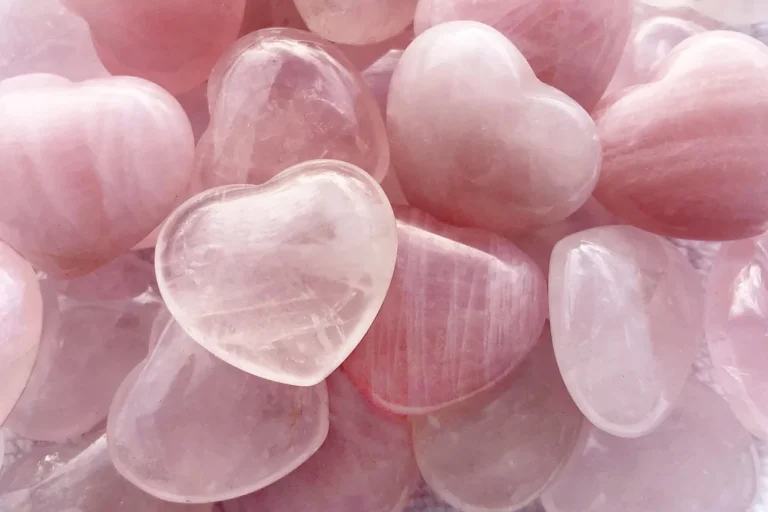
Rose Quartz
Love · Success · HappinessWith its delicate pink colours and gentle, translucent appearance, Rose Quartz has been treasured for centuries and is traditionally associated with love, success and happiness.
Rose Quartz is a pink variety of quartz found in many parts of the world, including Madagascar, where our gemstone hearts originate. Its colours range from the palest blush pink to deeper rosy shades, sometimes with a beautiful cloudy or milky appearance.
Rose Quartz often forms in large masses within rocks called pegmatites, which develop as mineral-rich molten rock slowly cools deep underground. Its pink colouring is thought to come from extremely tiny mineral inclusions within the quartz. When polished, the stone reveals its lovely soft glow.
Rose Quartz has been used for jewellery, ornaments and decorative carvings since ancient times. Its beautiful pink colour has made it a lasting symbol of affection and friendship, and it is often given as a thoughtful gift to someone special.
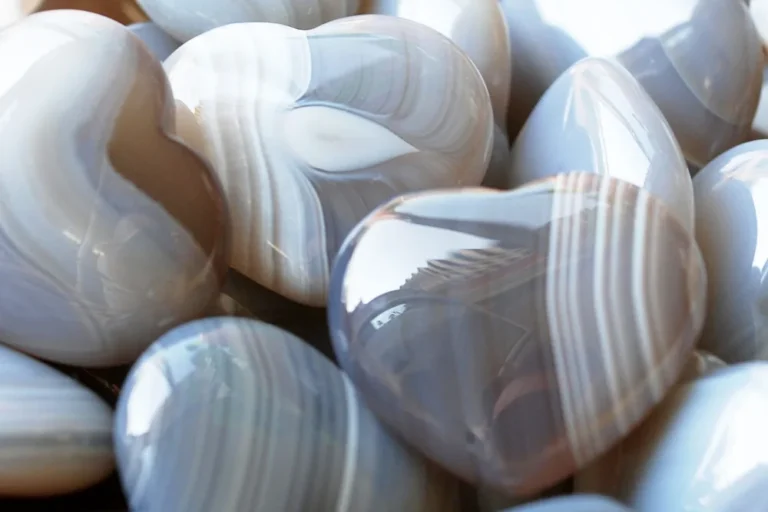
Agate
Empowerment · Self-DeterminationWith its beautiful flowing bands and delicate shades of blue, grey and white, Agate is a fascinating gemstone traditionally associated with empowerment and self-determination.
Agate is a variety of chalcedony, a form of quartz made from extremely tiny crystals. It is found in many parts of the world, including Brazil, where our gemstone hearts originate. Agate occurs in an extraordinary range of colours and patterns, with some varieties displaying beautiful curved stripes.
These stripes tell a remarkable geological story. Agate often forms inside cavities in volcanic rocks, where water carrying dissolved silica gradually deposits thin layers of mineral material. Over long periods of time, these layers build up to create the delicate bands visible when the stone is cut and polished.
Agate has been admired for thousands of years and was used by ancient civilisations to make jewellery, seals and carved ornaments. Its naturally layered patterns have made it especially popular with collectors, while gemstone traditions associate it with determination, confidence and personal strength.
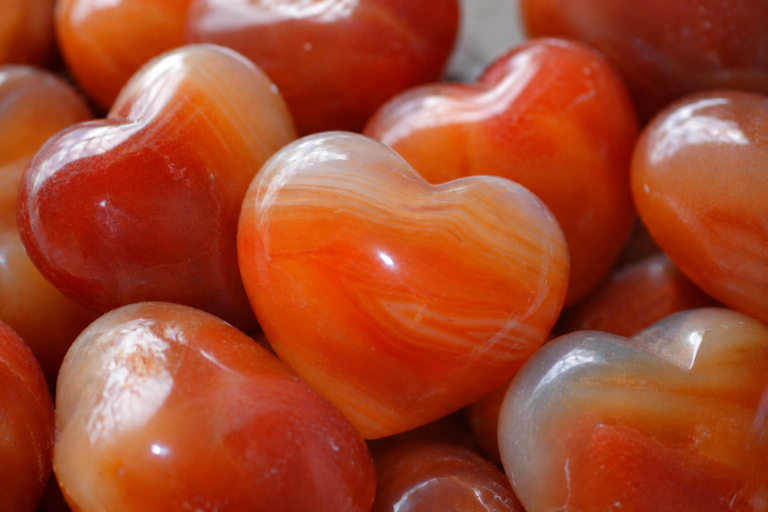
Carnelian
Passion · Courage · MotivationWith its glowing orange and reddish-brown colours, Carnelian has been treasured since ancient times and is traditionally associated with passion, courage and motivation.
Carnelian is a variety of chalcedony, a form of quartz made from extremely tiny mineral crystals. It occurs in many parts of the world, including Brazil, where our gemstone hearts originate. Its colours range from warm honey-orange to rich reddish-brown.
Carnelian gets its beautiful colours from tiny amounts of iron compounds within the stone. Some pieces are slightly translucent, allowing light to pass through their edges and creating a warm, glowing appearance. When polished, its natural colours and occasional delicate bands become even more striking.
Carnelian was especially prized in ancient Egypt, where it was used for jewellery, beads and protective amulets. The Romans also carved it into engraved gemstones used as seals. Its fiery colours have inspired traditional associations with confidence, determination and the courage to follow one's ambitions.
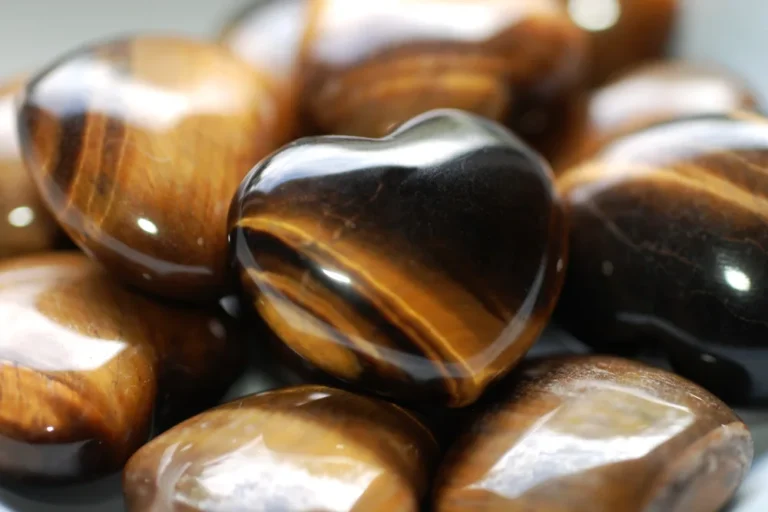
Tiger's Eye
Self-Confidence · Inner StrengthWith its golden-brown stripes and beautiful silky shimmer, Tiger's Eye is a fascinating gemstone traditionally associated with self-confidence and inner strength.
Tiger's Eye is a variety of quartz famous for its rich golden, honey and dark brown colours. Although found in several countries, South Africa is one of its most important sources and is where our gemstone hearts originate.
What makes Tiger's Eye especially remarkable is the way light appears to move across its surface. This happens because of extremely fine, parallel mineral fibres within the stone. As you turn a polished Tiger's Eye heart, a bright band of light seems to glide across it. This fascinating optical effect is called chatoyancy, from the French expression for "cat's eye".
The stone's golden colouring develops through the presence of iron compounds. Its shimmering appearance has made it popular for jewellery and decorative carvings, while its resemblance to the watchful eye of a tiger has inspired traditional associations with courage, confidence and determination.
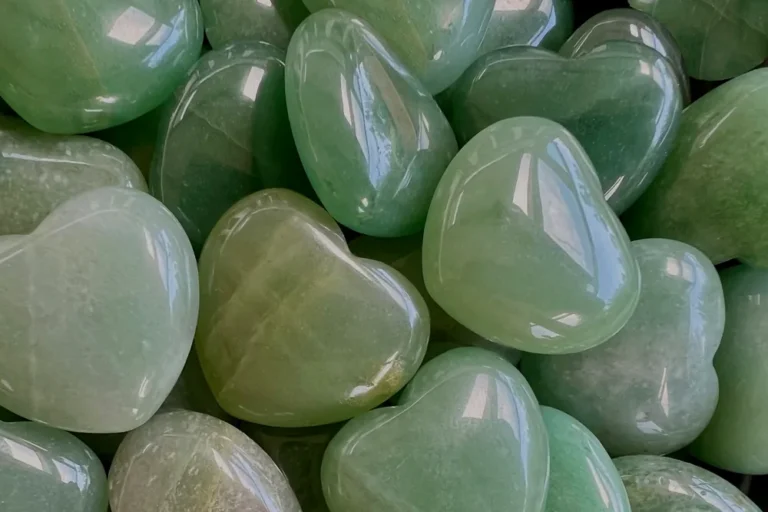
Green Aventurine
Confidence · Faith · CourageWith its soothing shades of green and occasional delicate sparkle, Green Aventurine is a beautiful gemstone traditionally associated with confidence, faith and courage.
Green Aventurine is a variety of quartz that gets its characteristic colour from tiny inclusions of green minerals, particularly a mica called fuchsite. It occurs in several parts of the world, including India, where our gemstone hearts originate. Its colours can range from pale, almost translucent green to rich forest-green shades.
One of Aventurine's most fascinating features is a subtle shimmering effect known as aventurescence. This happens when tiny, reflective mineral particles catch the light inside the stone. The name Aventurine is linked to the Italian expression a ventura, meaning "by chance", referring to the accidental discovery of a similarly sparkling type of glass.
Aventurine has long been used for jewellery, ornaments and decorative carvings. Its gentle green colouring has inspired associations with nature, renewal and personal growth. In gemstone traditions, it is also regarded as a symbol of optimism and the courage to embrace new opportunities.
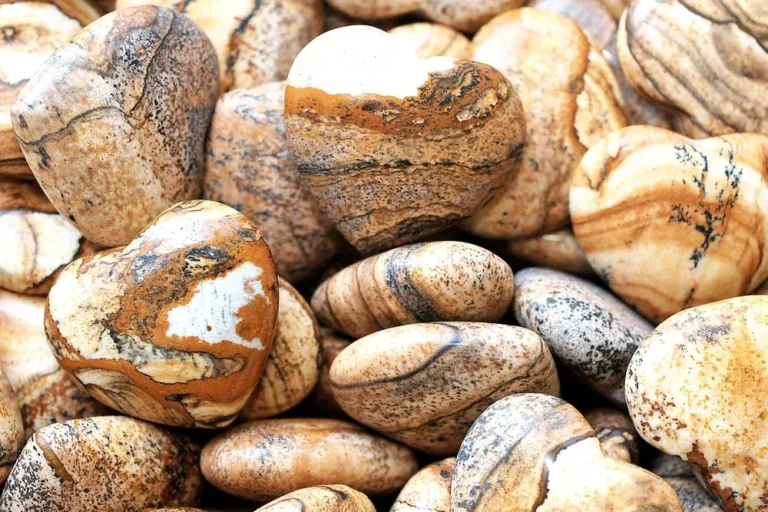
Landscape Jasper
Patience · Wisdom · BraveryWith its beautiful earthy colours and intricate natural patterns, Landscape Jasper resembles tiny paintings of mountains, deserts and distant horizons. It is traditionally associated with patience, wisdom and bravery.
Landscape Jasper, also known as Picture Jasper, is a decorative variety of jasper belonging to the quartz family. It occurs in several parts of the world, including South Africa, where our gemstone hearts originate. Its colours range from sandy beige and warm brown to cream, rust and occasionally darker shades.
What makes Landscape Jasper so fascinating is the way its natural markings can resemble miniature landscapes. These patterns develop through variations in mineral content, particularly iron compounds, during the stone's geological formation. When cut and polished, the contrasting colours reveal shapes that can look remarkably like hills, rivers, trees or distant mountain ranges.
No two pieces of Landscape Jasper have exactly the same markings, making every heart a little different. Its connection with the colours and patterns of the natural world has inspired traditional associations with patience, thoughtful decisions and the bravery to face life's challenges. Look closely at your heart and you might discover a tiny landscape of your own.
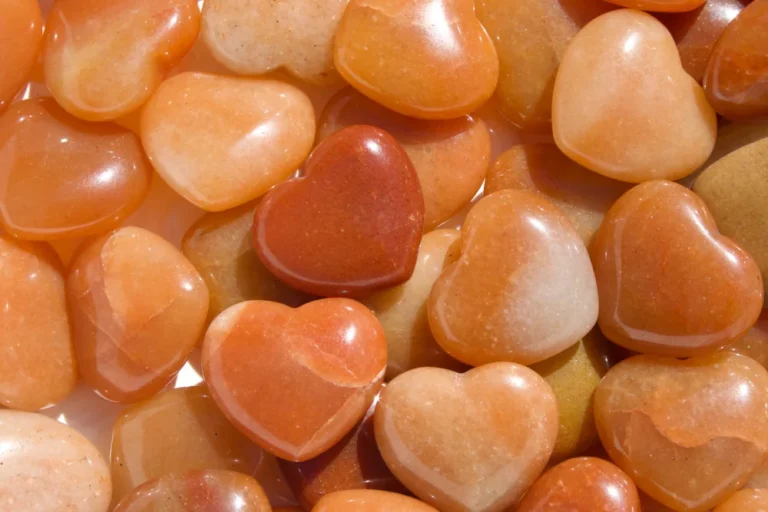
Red Aventurine
Vitality · Celebration · CreativityWith its warm orange, peach and reddish tones, Red Aventurine is an inviting gemstone traditionally associated with vitality, celebration and creativity.
Red Aventurine belongs to the quartz family and is closely related to Green Aventurine. While the green variety gets its colour from minerals such as fuchsite, the warm colours of Red Aventurine commonly come from tiny inclusions of iron-rich minerals, including hematite and goethite. Aventurine occurs in several countries around the world.
Some pieces of Aventurine display a delicate sparkling effect known as aventurescence. This happens when tiny reflective mineral particles catch the light within the stone. The effect varies considerably, so some hearts appear softly coloured while others show a gentle shimmer. Its natural shades can range from pale apricot to deeper rusty red.
The name Aventurine is connected to the Italian expression a ventura, meaning "by chance", originally associated with the accidental creation of sparkling glass. Today, Red Aventurine is admired for its cheerful colouring and is traditionally linked with enthusiasm, imagination and the joy of new beginnings.
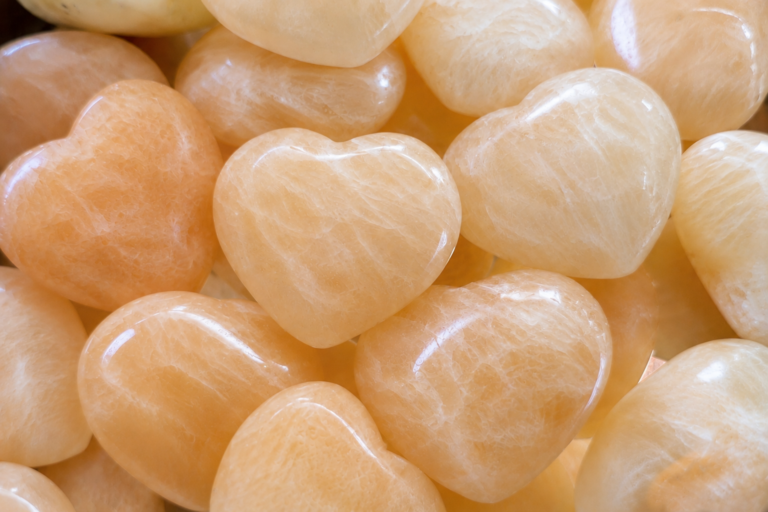
Orange Calcite
Motivation · Confidence · EnergyWith its glowing shades of apricot, honey and warm orange, Orange Calcite is a wonderfully cheerful gemstone. Its sunny appearance has inspired traditional associations with motivation, confidence and energy.
Orange Calcite is a colourful variety of calcite, a mineral made from calcium carbonate. Calcite is one of the most widespread minerals on Earth and is found in limestone, marble and even some seashells. Our Orange Calcite hearts originate from China, although this remarkable mineral occurs in many countries around the world.
One of calcite's most fascinating properties is the way it interacts with light. Some transparent crystals can produce a phenomenon called double refraction, making objects viewed through them appear doubled. Orange Calcite gets its warm colouring from small amounts of impurities, including iron-rich materials, while its delicate cloudy patterns and bands reflect variations within the stone as it formed.
Calcite is softer than quartz, making it easier for skilled stoneworkers to carve into beautiful shapes, although it also requires more careful handling. Its warm, uplifting colours have made Orange Calcite popular for decorative objects and polished gemstones. Traditionally associated with enthusiasm and positive energy, each heart is a cheerful reminder to approach new challenges with confidence.
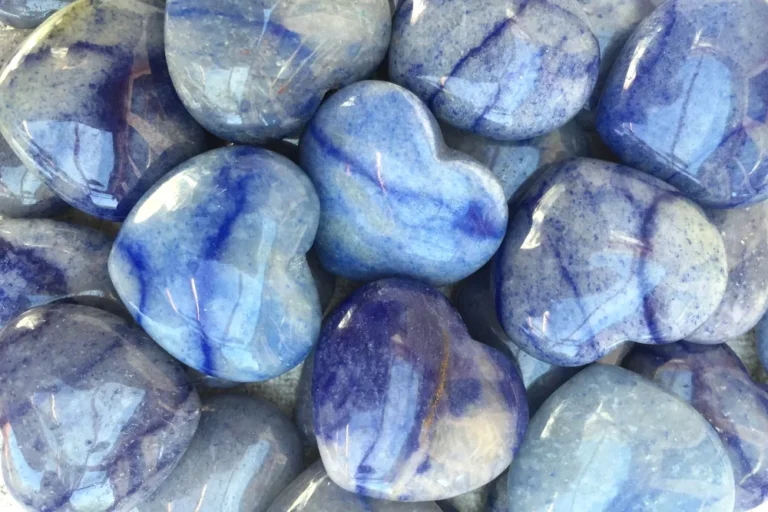
Blue Quartz
Patience · Growth · PersistenceWith its beautiful shades of blue and intricate natural markings, Blue Quartz is a captivating gemstone traditionally associated with patience, growth and persistence.
Blue Quartz is a fascinating variety of quartz, one of the most abundant minerals in the Earth's crust. Although quartz occurs in many colours, naturally blue varieties are relatively unusual. Blue Quartz is found in several parts of the world, and our gemstone hearts originate from Russia.
Unlike Amethyst, whose purple colour develops through changes within the quartz crystal itself, Blue Quartz usually gets its colour from tiny inclusions of other minerals. These may include blue minerals such as dumortierite or certain amphiboles. Depending on the inclusions present, the stone can display soft cloudy blues, darker streaks and beautiful variations in colour. The precise minerals responsible can differ between specimens.
Quartz has been admired and used by people for thousands of years, from decorative objects to jewellery and carvings. Its durability makes it especially suitable for polished gemstone hearts. The calming appearance of Blue Quartz has inspired traditional associations with patience, steady personal growth and the determination to keep moving forward.
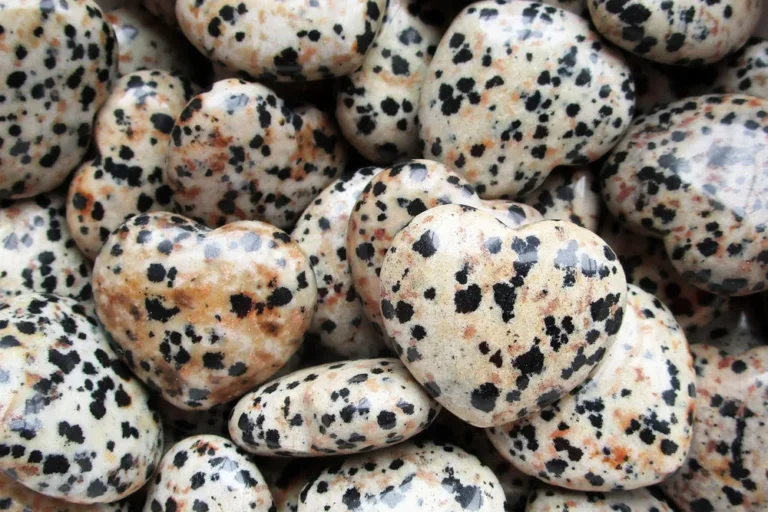
Dalmatian Jasper
Playfulness · Positivity · EnthusiasmWith its cheerful spotted appearance, Dalmatian Jasper is one of the most instantly recognisable gemstones. Its playful markings have inspired traditional associations with playfulness, positivity and enthusiasm.
Dalmatian Jasper takes its name from the Dalmatian dog, whose famous spotted coat closely resembles the stone's cream-coloured background and dark markings. Our gemstone hearts originate from Mexico, a well-known source of this fascinating decorative stone.
Despite its familiar name, Dalmatian Jasper is not technically a true jasper. It is a naturally occurring rock made mainly from quartz and feldspar. Its distinctive black spots are formed by a dark mineral called arfvedsonite, which developed within the rock as it formed. The occasional reddish-brown markings come from iron-rich minerals.
Every Dalmatian Jasper heart has its own arrangement of spots, making each one a little different. Its lively appearance has made it popular for jewellery and decorative carvings, while gemstone traditions associate it with optimism, enthusiasm and remembering to enjoy life's playful moments.
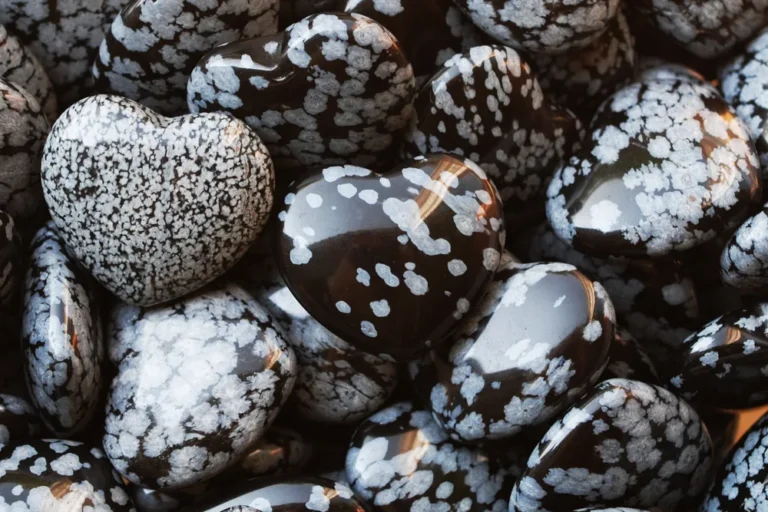
Snowflake Obsidian
Balance · Optimism · Self-ConfidenceWith its dark, glossy surface scattered with delicate snowflake-like patterns, Snowflake Obsidian is a remarkable volcanic stone traditionally associated with balance, optimism and self-confidence.
Snowflake Obsidian is a type of natural volcanic glass. It forms when lava cools so quickly that most of its minerals do not have time to grow into crystals. Obsidian occurs in volcanic regions around the world, including Mexico, where our gemstone hearts originate.
Its beautiful pale markings are not actually snowflakes. They are clusters of tiny crystals, usually made from a mineral called cristobalite, which develop within the dark volcanic glass. These crystal clusters spread out into patterns that can look like falling snow or miniature flowers.
Obsidian has been used by people for thousands of years to make tools, arrowheads and decorative objects. When broken, it can produce incredibly sharp edges, making it especially useful to ancient civilisations. Today, Snowflake Obsidian is admired for the beautiful contrast between its dark glass and pale natural patterns.
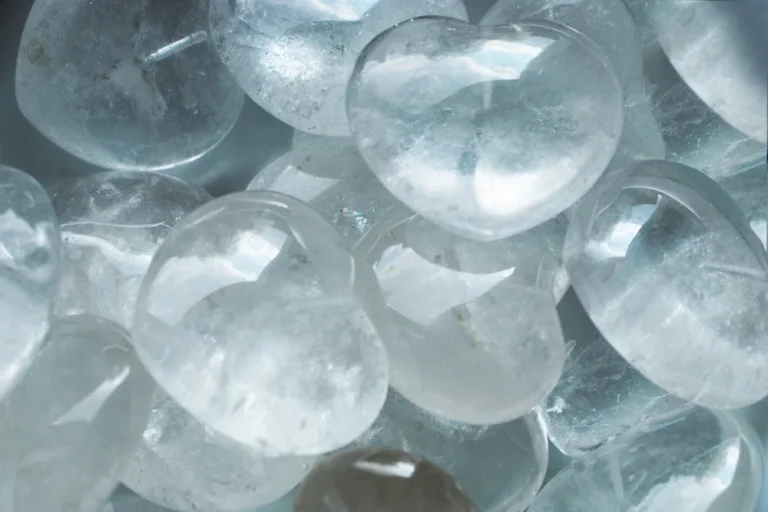
Clear Quartz
Clarity · Stability · DirectionLike tiny pieces of ice captured in stone, Clear Quartz hearts reveal a beautiful world of transparency, delicate white clouds and shimmering reflections. This timeless gemstone is traditionally associated with clarity, stability and direction.
Clear Quartz is the colourless variety of quartz, one of the most widespread minerals on Earth. It is also known as Rock Crystal or Mountain Crystal, names inspired by its remarkable resemblance to frozen water. The ancient Greeks called it krystallos, meaning ice, and believed that clear quartz was water that had frozen so completely it could never melt. Our gemstone hearts originate from Angola.
One of the most fascinating features of Clear Quartz is the variation within the stone itself. Some hearts are almost perfectly transparent, allowing light to pass through like glass. Others contain soft, milky clouds, delicate veils or tiny internal patterns. These natural features can develop when minute pockets of fluid or other inclusions become trapped as the crystal grows, or through tiny fractures within the stone. Each heart reveals its own beautiful details.
Quartz crystals naturally grow into six-sided shapes, although our hearts have been carefully cut and polished to reveal their smooth surfaces. For thousands of years, people have admired quartz for jewellery, ornaments and carvings. Its clear, luminous appearance has also inspired traditional associations with clear thinking, finding direction and remaining steady through life's changes.
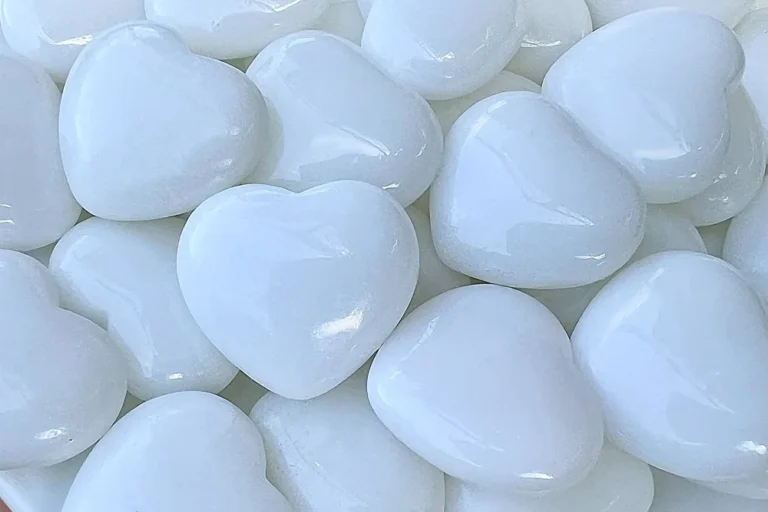
White Jade
Clarity · Patience · KindnessWith its soft, luminous white colouring and beautifully smooth surface, White Jade has an understated elegance. For centuries, jade has been treasured as a symbol of wisdom and virtue, while White Jade is traditionally associated with clarity, patience and kindness.
Jade holds a particularly special place in Chinese history, where it has been admired and carved for thousands of years. Our White Jade hearts originate from China, a country with one of the world's oldest jade-working traditions. Ancient Chinese craftspeople transformed jade into ornaments, ceremonial objects and beautifully detailed carvings, often associating the stone with goodness, wisdom and honour.
Interestingly, the name jade refers to two different mineral materials: nephrite and jadeite. Both can occur in white as well as green and other colours. Unlike gemstones formed from a single large crystal, jade is made from extremely fine, tightly interlocking mineral crystals. This remarkable structure gives it exceptional toughness and helps explain why it has been used for intricate carvings throughout history.
White Jade can range from brilliant white to delicate creamy or slightly translucent shades. Its gentle appearance has inspired traditional associations with thoughtful decisions, patience and treating others with kindness. Each polished heart offers a small reminder of the beauty that can be found in calmness and consideration.
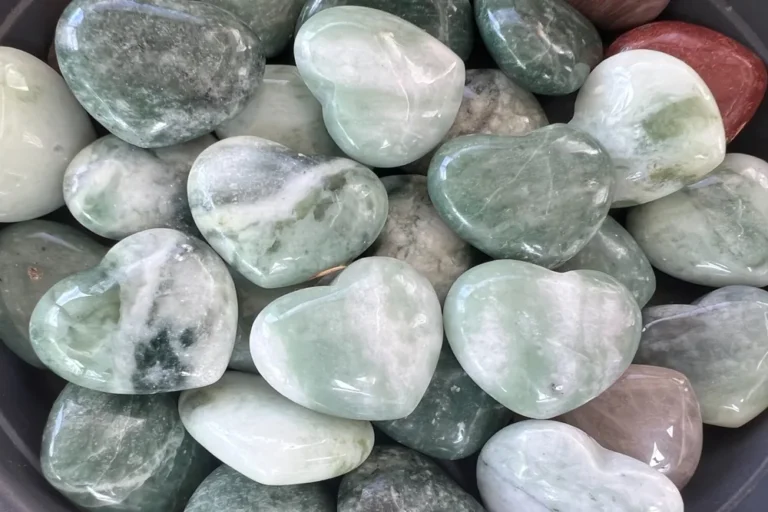
Green Jade
Wisdom · Renewal · HarmonyWith its gentle green colouring and beautiful natural marbling, Green Jade has been treasured for thousands of years. Deeply connected with Chinese culture, this elegant gemstone is traditionally associated with wisdom, renewal and harmony.
Jade has played an extraordinary role in Chinese history for more than 5,000 years. Our Green Jade hearts originate from China, where jade has long been admired as a symbol of virtue, beauty and good fortune. Ancient craftspeople carved it into jewellery, ornaments and ceremonial objects, while Chinese scholars associated its qualities with wisdom, kindness and moral character.
One of jade's most remarkable characteristics is its toughness. The name jade traditionally refers to two different mineral materials, nephrite and jadeite, both formed from extremely fine, tightly interlocking crystals. This structure makes jade unusually resistant to breaking and explains why it has been used for detailed carvings and even tools throughout history.
Green Jade can display an extraordinary variety of shades, from soft, almost translucent green to deeper forest tones. Some pieces contain delicate white clouds, streaks or contrasting patches that create beautiful natural patterns. Its connection with nature and the changing seasons has inspired traditional associations with renewal, balance and living in harmony with the world around us.
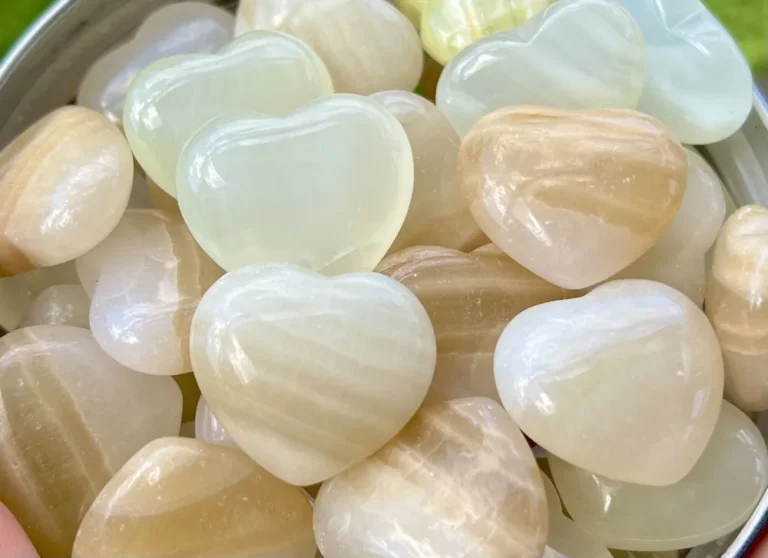
Yellow Jade
Optimism · Wisdom · JoyWith its delicate shades of honey, cream and soft yellow-green, Yellow Jade has a wonderfully warm and luminous appearance. Its cheerful colours have inspired traditional associations with optimism, wisdom and joy.
Our Yellow Jade hearts originate from Afghanistan, a country renowned for its remarkable variety of minerals and decorative stones. The name Yellow Jade describes the stone's beautiful appearance, although the term jade is sometimes used commercially for materials that resemble traditional jade rather than belonging to the same mineral family.
Stones sold under the name Afghan Jade are often varieties of serpentine, a group of minerals that can display soft green, yellow and creamy colours. Some pieces have a delicate translucency, allowing light to travel a little way into the stone, while others reveal gentle bands and cloudy patterns. These variations give each polished heart its own character.
Afghanistan's mountainous landscape has produced beautiful ornamental stones for centuries. The warm, sunny colouring of Yellow Jade makes it especially appealing, while its traditional associations with optimism, thoughtful decisions and joy offer a cheerful reminder to appreciate life's brighter moments.
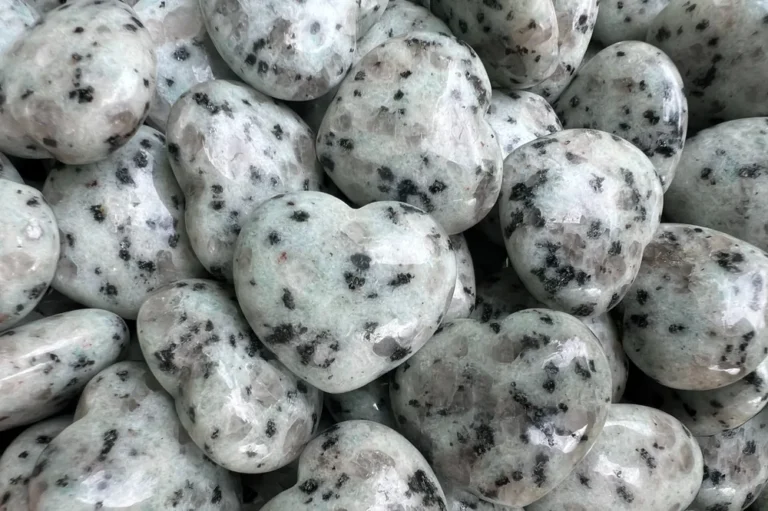
Kiwi Jasper
Comfort · Renewal · ReassuranceWith its gentle mint-green colouring and scattered dark spots, Kiwi Jasper is a wonderfully distinctive stone. Its soothing appearance has inspired traditional associations with comfort, renewal and reassurance.
Kiwi Jasper is also known as Sesame Jasper or Sesame Stone, names inspired by its speckled appearance. The dark markings scattered across its pale green, cream and grey background resemble tiny seeds. Our gemstone hearts originate from China, where many beautiful decorative stones are cut and polished into jewellery and ornaments.
Despite its name, Kiwi Jasper is not necessarily a true jasper. It is a commercial name used for a decorative stone containing a mixture of minerals, which give it its characteristic colours and spotted patterns. The darker markings are formed by contrasting mineral grains within the rock, while the lighter areas can display soft greenish and creamy shades. Every heart has its own natural arrangement of spots and markings.
The stone's name also brings to mind the colours and tiny seeds of a kiwi fruit, making it especially memorable. Its gentle colouring and playful markings create an appealing combination, while its traditional associations with reassurance and renewal offer a reminder that even small moments of comfort can make a difference.